
Imagine the scenario; it’s a scorching July day, and you are seated comfortably in your living room. Suddenly, the air conditioning unit balks and starts producing a rhythmic clanking sound. After a while, it eventually conks out. Or, alternatively, you have your energy bills increased almost double, even though you have not made any changes to your thermostat settings?
For many Americans, the HVAC system is the overlooked hero of the house. Even if it is not visible (either behind the curtains or the drywall), it contributes to your indoor air quality and your temperature being just right and it does so silently. Nevertheless, when it gets to the point of replacement for the elderly unit, one is likely to be flabbergasted by the multitude of options available.
Among them are SEER2 ratings, heat pumps, and different configurations of furnaces, the right choice being a high-stakes decision. In this exhaustive guide, we will simplify everything that you need to know in order to select the best HVAC system for your home, thus guaranteeing long-lasting comfort, energy saving, and finally the absence of worry.
Before we start with the “how-to” part, it is very important to clarify what is the topic at hand. The term HVAC refers to Heating, Ventilation, and Air Conditioning. Although most people consider their air conditioner only when talking about HVAC, it is in fact a network of components working together to regulate the entire indoor environment.
The usual residential HVAC configuration consists of an outdoor compressor or condenser, an indoor evaporator coil, a furnace or air handler, and a duct system to carry the treated air. Recently, technology has made big steps forward in this area, leading to the introduction of more intelligent and less energy-consuming ways to provide comfort in American homes all year round.
Assess Your Home’s Specific Needs
It is not necessary to control the climate in every house in the same manner. A vast ranch in Texas will need totally different climate control compared to a triple-decker in Boston. Therefore, it is very important to check your home’s “envelope” before you start shopping.
Square Footage and Load Calculation
One of the main reasons persons who own houses encounter problems is the acquisition of air conditioning equipment that is either too small or too large. An HVAC unit that is too small will be running all the time trying to get to the desired temperature and eventually the parts will wear out before they are supposed to. On the other hand, the oversize system will be “short-cycling,” switching on and off very quickly, which does not help to get rid of the moisture and causes discomfort due to temperature differences.
In order to avoid such mistakes, request your contractor to perform a Manual J Load Calculation. This widely accepted method will take into account your home’s measurements, heat insulation quality, window types and even the climate in your area to find the precise amount of cooling or heating that you require.
Climate Considerations
In the Southern U.S., which is characterized by very humid and hot weather, it is common practice to use a gas furnace together with a high-efficiency central air conditioner. But in milder areas, electric heat pumps are the choice of many homeowners. These systems are very flexible because they can heat or cool the house by relocating heat from the house or to the house.
Types of HVAC Systems Available Today
Selecting a new HVAC unit generally allows you to choose from four main configurations. Each of them has its advantages and disadvantages depending on your existing infrastructure.
- Split Systems
This HVAC configuration is by far the most widely used one in the U.S. It has two basic components: the outdoor machine that has the compressor and condenser in it and the indoor unit that is usually a furnace or an air handler. They have a good reputation, a reliable maintenance-free life, and a lifespan of 15–20 years. - Hybrid Heat Pump Systems
A hybrid system is a combination of an electric heat pump and a gas furnace. The system allows an automatic switching between the two. In moderately cold weather conditions, the heat pump will take up the load very efficiently by using electricity. The gas furnace will be the next to provide heat if the temperature goes below freezing. This is great for slashing your electricity bills in countries with changing climates. - Ductless Mini-Splits
In case you are living in an old house that does not have ductwork already installed, or your new room above the garage is a recent addition, a ductless mini-split will solve your problem. Such systems have one compressor outside connected to multiple wall-mounted indoor units. They provide you with the option of “zoning,” i.e., you only cool or heat the areas of your home that you are occupying at that time. - Packaged Systems
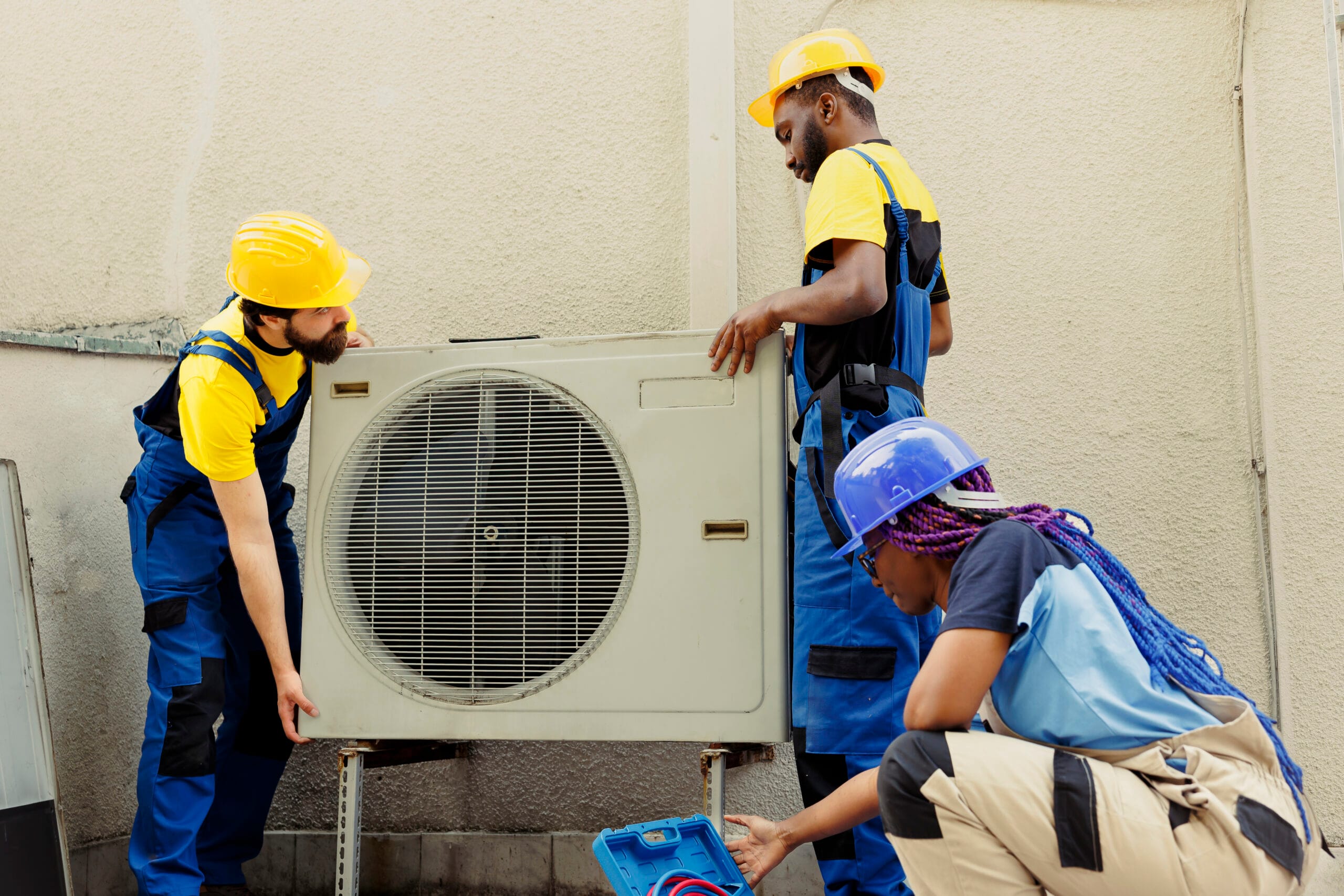
A packaged HVAC unit, which is very common in hot places and homes with limited space indoors, has all its parts—compressor, coils, and heater—installed in one outdoor cabinet. Usually, these are placed on the roof or a concrete slab next to the house.
Energy Efficiency: Navigating SEER2 and AFUE Ratings
By 2026, energy efficiency isn’t merely an eco-friendly option that is people-friendly; it is still the same necessity but now from the monetary point of view. To be able to measure up the different HVAC models by their efficiency, one must get familiar with two important acronyms:
SEER2 (Seasonal Energy Efficiency Ratio): This denotes the cooling efficiency. The SEER2 rating is higher, the less energy the unit consumes to cool your house. In the U.S., the minimum SEER2 rating is region-specific, but a generally good practice is to seek a unit with a rating of 16 or higher for major savings.
AFUE (Annual Fuel Utilization Efficiency): This one is for furnaces. It indicates the ratio of the fuel (most of the time gas or oil) that is successfully transformed into heat to the amount that is wasted through the chimney. A furnace with the best performance will have its AFUE between 90% and 98%.
The operating cost of an HVAC system can be said to be the price you pay for comfort; and the main barrier to purchase of a high-efficiency system is its higher cost. However, the savings in energy bills can frequently equal or surpass the difference within just a few years.
The Importance of Indoor Air Quality (IAQ)
Our HVAC system generally brings temperature to mind first. But the ventilation, which is represented by “V” in HVAC, is also very important. Energy conservation is the main purpose behind making modern houses airtight, but these houses can become very unhealthy since the air that comes in is not fresh—the allergens, dust, and VOCs (volatile organic compounds) can all linger inside.
You should think of your system as a whole and add the following options:
Whole-Home Dehumidifiers: These are a must for the climate of the Southeast; they prevent mold from spreading.
Air Purifiers/UV Lights: Ductwork can accommodate these installations, which would kill germs and viruses.
High-MERV Filters: Make sure the new system you choose is capable of using these filters, which are highly efficient in capturing particulate matter, to maintain the good air quality for your family.
Selecting the Right Brand and Contractor
The HVAC system’s brand is important, of course; however, its installation quality has a greater impact. No matter how costly the highest-end unit will be, it cannot perform to its full potential without a proper installation.
U.S. Brands That Are Most Popular
Trane, Carrier, Lennox, and Rheem are among the brands that are traditionally found in the American market. When you evaluate the brands, consider their warranty offerings. A regular warranty typically has a 10-year parts cover, but some premium models come with a lifetime heat exchanger warranty or an extended labor coverage option.
Selecting an Expert Installer
Don’t choose the contractor with the cheapest quote. Try to find contractors who are NATE-certified (North American Technician Excellence). Read their online reviews, and make sure they are licensed and insured in your state. A contractor whom you can trust will check your ducting carefully before putting in a new HVAC system because leaking ducts can let out almost a third of the treated air.
Cost vs. Value: What Should You Expect to Pay?
Cost of a complete New HVAC system installation largely depend upon the site, however, complexities involved in the job also play a major role. Generally, the price range for a complete system replacement is between $6,000 to $12,000 for U.S. homeowners.
Still, the potential for “hidden” savings is there to be seen:
Federal Tax Credits: As a result of the Inflation Reduction Act, a large number of Americans are eligible for considerable tax credits (even up to $2,000) for the installation of high-efficiency heat pumps.
Utility Rebates: Upgrading to more energy-efficient equipment can often make you eligible for cash back from many local power companies.
Long-term savings: If you were to switch from a SEER10 to a SEER 18 unit, you could reduce your cooling costs by almost 40%.
Maintenance: Protecting Your Investment
The installation of the new HVAC system is just the beginning of the work. The only way for the system to live up to its full life expectancy is through regular maintenance.
Change Filters Regularly: Inspect your filters every one to three months. When a filter is clogged, airflow is limited, and consequently, the system has to put in more effort.
Annual Tune-Ups: Have a professional do an inspection in the spring (for AC) and in the fall (for heat).
Clear the Area: Make sure nothing like dirt, leaves, or big bushes over the outdoor unit as this will help in efficient heat exchange.
Common Signs It’s Time for a New System
How can you tell whether or not a new HVAC system is necessary, or a quick fix will suffice? There’s the “50% Rule” to think about. If the repair cost exceeds 50% of the system’s value—and the system has been in operation for over 10 years—then replacement is typically the more prudent choice financially.
There are other signs that should not be ignored, such as:
Unusual sounds (grinding, squealing, or banging).
Different rooms having varying temperatures.
Regular repairs during the last two years.
An unexpected and unexplained increase in power use.
SEO Metadata
- SEO Title: How to Choose the Right HVAC System for Your Home
- Meta Description: Selecting the right HVAC system is crucial for comfort and savings. Learn how to choose the best HVAC unit for your home with our expert 2026 guide.
- Slug: /how-to-choose-the-right-hvac/
How to Choose the Right HVAC System for Your Home
Have you ever sat in your living room in the middle of a sweltering July heatwave, only to have your air conditioner start making a rhythmic clanking sound before finally giving up the ghost? Or perhaps you’ve noticed your energy bills skyrocketing, even though you haven’t changed your thermostat settings?
For most U.S. homeowners, the HVAC system is the unsung hero of the house. It works silently behind the scenes (or behind the drywall) to ensure your indoor air quality is breathable and your temperature is perfect. However, when it comes time to replace an aging unit, the sheer number of options can be overwhelming. From SEER2 ratings to heat pumps and furnace configurations, making the right choice is a high-stakes decision.
In this comprehensive guide, we will break down everything you need to know to choose the right HVAC system for your home, ensuring long-term comfort, energy efficiency, and peace of mind.
Understanding the Basics: What is an HVAC System?
Before diving into the “how-to,” it is essential to understand what we are actually talking about. HVAC stands for Heating, Ventilation, and Air Conditioning. While many people use the term to refer strictly to their air conditioner, it is actually an integrated network of components designed to manage your entire indoor environment.
A standard residential HVAC setup typically includes an outdoor compressor or condenser, an indoor evaporator coil, a furnace or air handler, and a system of ductwork to distribute the treated air. In recent years, technology has advanced significantly, introducing smarter, more efficient ways to keep American homes comfortable year-round.
Assess Your Home’s Specific Needs
Not every house requires the same type of climate control. A sprawling ranch in Texas has vastly different requirements than a triple-decker in Boston. Before you start shopping, take an inventory of your home’s “envelope.”
Square Footage and Load Calculation
The most common mistake homeowners make is buying a system that is either too small or too large. An undersized HVAC unit will run constantly, struggling to reach the target temperature and wearing out its components prematurely. Conversely, an oversized system will “short-cycle,” turning on and off rapidly, which fails to remove humidity and creates uncomfortable temperature swings.
To get it right, ask your contractor for a Manual J Load Calculation. This industry-standard formula considers your home’s square footage, insulation levels, window types, and even local climate data to determine the exact capacity you need.
Climate Considerations
In the Southern United States, where humidity and heat are the primary concerns, a high-efficiency central air conditioner paired with a gas furnace is traditional. However, in more temperate regions, many homeowners are switching to electric heat pumps. These systems provide both heating and cooling by moving heat in or out of the house, making them incredibly versatile.
Types of HVAC Systems Available Today
When selecting a new HVAC unit, you generally have four primary configurations to choose from. Each has its pros and cons depending on your existing infrastructure.
1. Split Systems
This is the most common type of HVAC setup in the U.S. It consists of two main parts: an outdoor unit (containing the compressor and condenser) and an indoor unit (usually a furnace or air handler). They are reliable, easy to service, and can last 15–20 years with proper maintenance.
2. Hybrid Heat Pump Systems
A hybrid system combines an electric heat pump with a gas furnace. The system intelligently switches between the two. When the weather is mildly chilly, the heat pump handles the load efficiently using electricity. When temperatures drop below freezing, the gas furnace kicks in to provide more intense heat. This is an excellent way to save on utility bills in fluctuating climates.
3. Ductless Mini-Splits
If you live in an older home without existing ductwork, or if you’ve recently added a room over the garage, a ductless mini-split is a lifesaver. These systems use individual wall-mounted units connected to an outdoor compressor. They allow for “zoning,” meaning you only cool or heat the rooms you are currently using.
4. Packaged Systems
Common in warmer climates or homes with limited indoor space, a packaged HVAC unit houses all components—compressor, coils, and heater—in one single outdoor cabinet. These are typically installed on a roof or a concrete slab next to the house.
Energy Efficiency: Navigating SEER2 and AFUE Ratings
In 2026, energy efficiency is more than just an environmental “nice-to-have”; it is a financial necessity. To compare the efficiency of different HVAC models, you need to understand two key acronyms:
- SEER2 (Seasonal Energy Efficiency Ratio): This measures the cooling efficiency. The higher the SEER2 rating, the less electricity the unit uses to cool your home. In the U.S., the minimum SEER2 rating varies by region, but looking for a unit with a rating of 16 or higher is generally recommended for significant savings.
- AFUE (Annual Fuel Utilization Efficiency): This applies to furnaces. It measures how much of the fuel (usually gas or oil) is converted into heat versus how much is lost up the chimney. A high-efficiency furnace will have an AFUE of 90% to 98%.
While high-efficiency HVAC systems have a higher upfront cost, the reduction in your monthly utility bills often pays for the difference within just a few years.
The Importance of Indoor Air Quality (IAQ)
When we think about our HVAC system, we usually think about temperature. However, the “V” in HVAC—ventilation—is just as critical. Modern homes are built to be airtight to save energy, but this can trap allergens, dust, and VOCs (volatile organic compounds) inside.
When choosing your system, consider adding:
- Whole-Home Dehumidifiers: Essential for the humid Southeast to prevent mold growth.
- Air Purifiers/UV Lights: These can be integrated into your ductwork to kill bacteria and viruses.
- High-MERV Filters: Ensure your new system is compatible with high-efficiency particulate air filters to keep your family breathing easy.
Selecting the Right Brand and Contractor
The brand of your HVAC equipment matters, but the quality of the installation matters even more. Even the most expensive, top-of-the-line unit will underperform if it isn’t installed correctly.
Popular U.S. Brands
Brands like Trane, Carrier, Lennox, and Rheem are staples in the American market. When comparing brands, look at their warranty offers. A standard warranty usually covers parts for 10 years, but some premium models offer lifetime heat exchanger warranties or extended labor coverage.
Choosing a Professional Installer
Don’t settle for the lowest bid. Look for contractors who are NATE-certified (North American Technician Excellence). Check their online reviews and ensure they are licensed and insured in your state. A reputable pro will perform a thorough inspection of your ductwork before installing a new HVAC unit, as leaky ducts can waste up to 30% of your treated air.
Cost vs. Value: What Should You Expect to Pay?
The cost of a new HVAC installation varies wildly based on your location and the complexity of the job. On average, U.S. homeowners can expect to pay anywhere from $6,000 to $12,000 for a full system replacement.
However, you should also look for “hidden” savings:
- Federal Tax Credits: Under the Inflation Reduction Act, many Americans qualify for significant tax credits (up to $2,000) for installing high-efficiency heat pumps.
- Utility Rebates: Many local power companies offer cash back for upgrading to energy-efficient equipment.
- Long-Term Savings: Moving from a SEER 10 to a SEER2 18 unit can slash your cooling costs by nearly 40%.
Maintenance: Protecting Your Investment
Once your new HVAC system is in place, the work doesn’t stop there. Regular maintenance is the only way to ensure your system reaches its full life expectancy.
- Change Filters Regularly: Check your filters every 30 to 90 days. A clogged filter restricts airflow and forces the system to work harder.
- Annual Tune-Ups: Schedule a professional inspection every spring (for AC) and every fall (for heat).
- Clear the Area: Keep the outdoor unit free of debris, leaves, and overgrown bushes to ensure proper heat exchange.
Common Signs It’s Time for a New System
How do you know if you actually need a new HVAC unit or just a simple repair? Consider the “50% Rule.” If the cost of the repair is more than 50% of the value of the system—and the system is over 10 years old—replacement is usually the smarter financial move.
Other red flags include:
- Strange noises (grinding, squealing, or banging).
- Inconsistent temperatures across different rooms.
- Frequent repairs over the last two years.
- A sudden, unexplained spike in energy consumption.
FAQs
How long does a typical HVAC system last?
A properly taken care of HVAC system can last about 15 to 25 years as a matter of fact. The central cooling units and heat pumps generally are included (15–20 years) in the lower part, whereas the furnaces of good quality can last up to 20 years or even longer. If your device is more than 15 years old and needs repairs quite often, then getting a new one is usually the better option in terms of cost.
What size HVAC unit do I need for my house?
Capacity gets a “ton” rating. Usually, one ton of cooling is considered sufficient for a living area of 500 to 600 sq. ft. This is, however, an approximate value. The precise calculation of the cooling needs in your house should always be done by a specialist who will use a Manual J Load Calculation considering insulation, window types, and local climate.
Is a heat pump better than a traditional AC and furnace?
The efficiency of a heat pump is determined by the climate you live in. In the U.S. areas with moderate climates, heating pump is very efficient as it provides both heating and cooling. On the contrary, in regions where the mercury dips consistently below zero, the hybrid HVAC system (combination of heat pump and gas furnace) turns out to be the most reliable option for warmth and energy saving.
How much can I save with a high-efficiency HVAC system?
From an old, energy-consuming model to a new high-SEER2 HVAC unit, the cost of your electricity can be cut down by 20% to 40% every month. What is more, the federal tax credits and local utility rebates can frequently bring down the first purchase cost by several thousands of dollars.
How often should I have my system serviced?
As a rule of thumb, it is recommended to have the HVAC system checked and serviced two times a year. The first service should be done during the spring for the air conditioning and the second one during the fall for the heating system. Keeping the equipment in good condition through regular checks does not only eliminate the inevitable emergency malfunctions but also guarantees the system is running at maximum efficiency.
Conclusion
Selecting an appropriate HVAC unit would be one of the most considerable outlays ever performed by you, the owner of a house. The issue is not only to keep cool in summer and warm in winter but to build a place where your family can enjoy good health, be productive, and have comfort.
Considering the aspects of the right size, high energy-efficiency ratings, and professional installation, it becomes possible to convert such a stressful replacement into a long-term advantage for both your home’s worth and your budget. It is not advisable to wait till; your existing unit has completely broken down in the middle of a snowstorm or a heatwave. You better start now looking at the alternatives so as to be in a good position to make a decision that is both calm and well-informed.