
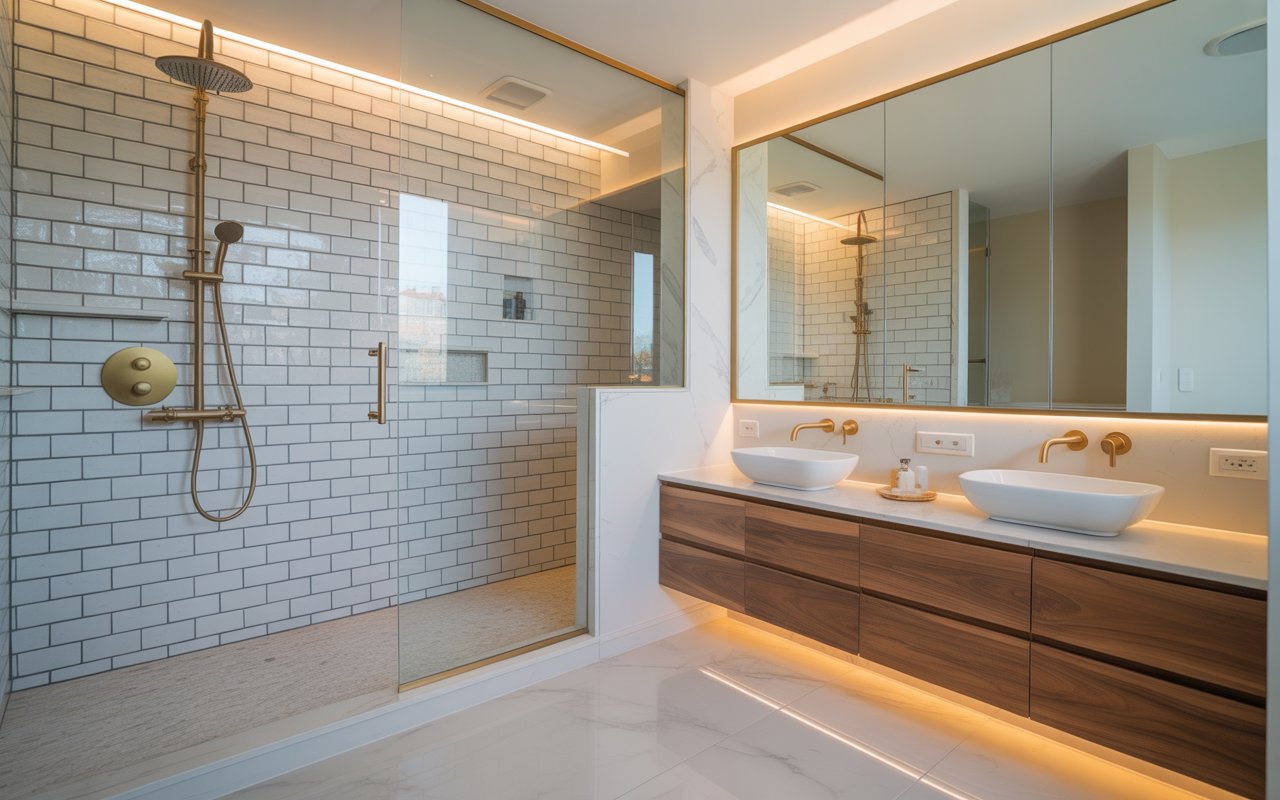
A bathroom remodel is one of the most significant and rewarding investments you can make in your home. However, the success of this project—and your peace of mind—depends entirely on selecting the right construction partner. Successfully selecting a contractor for your bathroom remodel requires moving beyond simple referrals and adopting a systematic due diligence process rooted in legal compliance and construction best practices.
Why Vetting Local Contractors is Your Most Important Bathroom Remodel Task
Here is your four-phase blueprint to choose a local, high-quality contractor and guarantee a successful bathroom remodel.
Phase 1: Local Vetting and Reputation (Hyper-Local Discovery)
The initial step is to build a candidate pool with traceable local records. While neighbor referrals are invaluable, you must verify the contractor’s track record independently.
| Actionable Step | Verification Source | Why It Matters |
| Check Local Sentiment | Google Reviews, Angi, Thumbtack [2, 3] | Focus on mid-range (3/4-star) reviews for nuanced insights into consistent strengths and weaknesses (e.g., scheduling issues vs. excellent tile work). |
| Assess Local Presence | Permanent Mailing Address, Business Longevity | A long-established local contractor has higher accountability, as their business survival depends on their community reputation. |
| Review the Portfolio | Contractor’s Website or Presentation | Look for signs of poor work disguised by photography: crooked tiles, excessive caulking, or dark stains that hint at underlying structural or water issues. |
Phase 2: The Non-Negotiable Credentials of a Bathroom Remodel
This phase shields you from legal and financial liability. Never compromise on these essential requirements, especially when undertaking a full bathroom remodel.
| Credential | Verification | Liability Protection |
| State/Local License | Official State or Local Licensing Board Search [4, 5] | Confirms minimum competency and legal standing. Unlicensed contractors cannot be held accountable and expose you to risk. |
| General Liability Insurance | Certificate from Insurer | Covers property damage (e.g., broken pipes) caused by the crew during the bathroom remodel. |
| Workers’ Compensation (WC) | State Verification (If employees exist) [5, 6] | Shields you from financial liability if a worker is injured on your property. This is critical for any major bathroom remodel. |
| Surety Bond | Contact the Bond Issuer Directly [4, 6] | Provides a financial guarantee if the contractor fails to complete the bathroom remodel according to the contract terms. |
The homeowner must confirm the current and unexpired status of the license with the relevant licensing board for the scope of the bathroom remodel project.
Phase 3: Mastering the Bid Process and Cost Management
Requesting bids from at least three different contractors establishes the fair market price and allows you to compare scope, not just cost. This process allows the homeowner to assess various personalities and compare distinct approaches to the bathroom remodel project.
Clarify Allowances and Avoid Low Bids
One of the most frequent budget traps is the use of allowances—ballpark figures for undetermined materials like tile or fixtures. Contractors sometimes insert unrealistically low allowances to make their total bid price appear cheaper. You must clarify all allowances before signing, requiring the contractor to justify their figures based on realistic mid-range options.
Be highly cautious when evaluating the “cheapest contractor.” An unusually low bid is a major financial red flag, often signaling they have excluded necessary components like permits, proper insurance, or plan to recoup costs later through excessive change orders. The single most important task is bid leveling—ensuring the scope is identical across all quotes so you can accurately compare value, not just the dollar amount.
Phase 4: Protecting Your Investment with a Strict Contract
Your contract is your most vital safeguard. Insist on a detailed agreement that handles logistics and financial leverage. In almost all cases, a bathroom remodel requires multiple permits for changes involving plumbing, electrical, or structural components. A professional will handle all permits.
Always avoid demanding excessive upfront payment. State laws often mandate that the down payment cannot exceed one-third (1/3) of the total contract price. A contractor demanding more than 30–50% upfront is a critical warning sign. Instead, structure milestone payments that align fund releases with verifiable project completions (e.g., rough-in inspection passed; tiling complete).
The result is a high-quality, legally compliant, and durable bathroom remodel. This ensures you receive the highest value from your significant bathroom remodel investment.
FAQs
What is the single most important credential I must verify before hiring a contractor for my bathroom remodel?
A: The most critical step is verifying the contractor’s current, unexpired license with the state or local licensing board. You must also confirm they carry General Liability insurance (for property damage) and, crucially, Workers’ Compensation (WC) insurance if they have employees, to shield you from liability if a worker is injured on site.
What is the maximum amount of money a contractor can legally ask for as an upfront deposit?
A: The law in many jurisdictions prohibits demanding an upfront deposit of more than one-third (1/3) of the total contract price. A contractor demanding more than 30%–50% upfront is a major financial red flag, often indicating potential instability or a scam.
Does my bathroom remodel require permits, and who should handle the process?
A: Yes, nearly all bathroom remodel projects require permits if the scope involves changes to plumbing, electrical wiring, subfloor/tile installation, or structural components. Your contractor must obtain all necessary permits and ensure they are posted visibly at the job site for inspections.
What is the best way to compare and evaluate multiple contractor bids?
A: Do not compare the total price alone. You must perform bid leveling across at least three quotes, comparing the detailed scope of work, material specifications, and allowances, not just the final total price. Clarify all vague material allowances to avoid massive, unexpected budget increases later.
hello there and thanks on your info – I have certainly picked up something new from right here. I did then again experience a few technical points the usage of this site, as I experienced to reload the web site many occasions previous to I may just get it to load properly. I have been wondering in case your hosting is OK? Now not that I am complaining, however sluggish loading circumstances instances will sometimes have an effect on your placement in google and can damage your high-quality ranking if advertising and ***********|advertising|advertising|advertising and *********** with Adwords. Anyway I am adding this RSS to my e-mail and can look out for a lot extra of your respective exciting content. Make sure you update this again soon..
Hi my loved one! I want to say that this post is awesome, nice written and come with approximately all significant infos. I would like to peer more posts like this .
Hello there, I found your blog by the use of Google at the same time as searching for a related topic, your website came up, it seems to be good. I’ve bookmarked it in my google bookmarks.